Setting a new standard for accessible health information for people with intellectual disability
We co-designed and built a knowledge management platform with people with lived experience of intellectual disability for the University of NSW.
We co-designed and built a knowledge management platform with people with lived experience of intellectual disability for the University of NSW.
People with intellectual disability experience some of the worst health outcomes of any group in Australia. Previous platforms had tried to close that gap and fallen short: splitting content by cohort, applying accessibility as an afterthought, or fading once the funding did. UNSW's National Centre of Excellence in Intellectual Disability Health set out to change that with a single digital platform designed to genuinely serve three vastly different audiences: adults with intellectual disability, their families and carers, and health professionals.
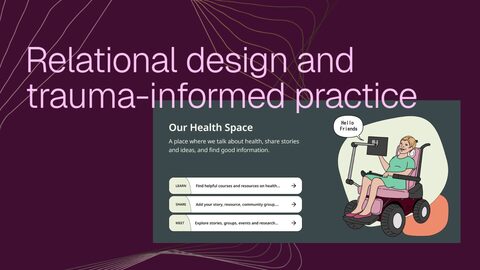
Portable worked with the National Centre team based at UNSW and its established community advisory group, which included adults with intellectual disability, carers, peer advocates, First Nations representatives, LGBTQI+ representatives, and health professionals.
Relational design and trauma-informed practice
We sent plain English pre-read materials to all test session participants at least 1 week in advance of the 1:1 website test interviews; so that people joining our research understood what to expect from the engagement, how their data and information would be collected, managed and deleted, ways they could participate or withdraw and, the different support options available to them and how to access those support options.
Our research participants were selected from the UNSW Advisory group, which means they have familiarity with design research, joining Zoom calls, providing feedback and sharing their thoughts on different things.
By setting expectations early and reengaging a group familiar with the format of online, remote research, we reduced the potential for engagement to feel overwhelming, which lowers the potential for distress or trauma to occur.
The team took three key steps to make the site work for people with intellectual disability:
Our Health Space was shaped through co-design with adults with intellectual disability. The early prototypes received an encouraging response from research participants, a sign that the design gave them the same polish and respect as services built for everyone else.
The platform brings curated health information and plain-language resources together, with features designed around how people actually use it:
Portable also built content pages that teach everyday browser accessibility skills:
We designed content pages that teach browser-based accessibility skills, so the people who use this platform carry those capabilities to any website, not just this one.
Shared tools give people with intellectual disability and their health professionals the same information to work from, supporting more collaborative, self-directed health care.
Our Health Space soft-launched to University of New South Wales (UNSW) partners in March 2026 and is now publicly available.
“Working with Portable was a genuine pleasure because it felt like working not just with a team, but as one team, including our colleagues with lived experience of intellectual disability. We shared a strong sense of values throughout the project, including a commitment to ensuring the First Nations stream was approached with care and sensitivity. I trusted them to create something accessible, culturally responsive, and meaningful in the everyday lives of the people at the centre of this work.”
Any organisation serving people across age, ability, or digital confidence faces a version of this challenge. When the gap between your least and most experienced audience is wide, the instinct is often to design for the middle, or to add accessibility tools after the fact.
This project shows that starting with the people who most need our consideration and designing outward produces a platform that works better for everyone. Grounding that process in relational design, trauma-informed practice, and genuine community co-design with people with lived experience produces something more durable still: a platform people trust, and capabilities that extend well beyond your product.
Emma RhysProducer
Nick RogersSenior Developer
Ruth TaylorPrincipal Technologist
Cristiano FantasiaSenior Experience Designer
Aishling CostelloSenior Design Strategist
Shoni EllisSenior Content Strategist
Gabrielle LisContent Creator and Content Strategist