AI adoption and governance
We help organisations adopt AI responsibly: setting the strategy and governance, building the capability to use it well, and putting it into practice.
We help organisations adopt AI responsibly: setting the strategy and governance, building the capability to use it well, and putting it into practice.

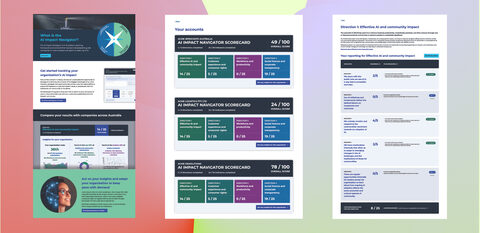
In October 2024, following the national AI safety standards and the policy for AI in government, Portable worked with CSIRO's Data61 and the National AI Centre on the AI Impact Navigator: a framework for assessing the social, economic and environmental impacts of AI, with a project checklist and impact assessment that make ethical decisions traceable. It's recognised as a voluntary standard complementing the National AI Framework.
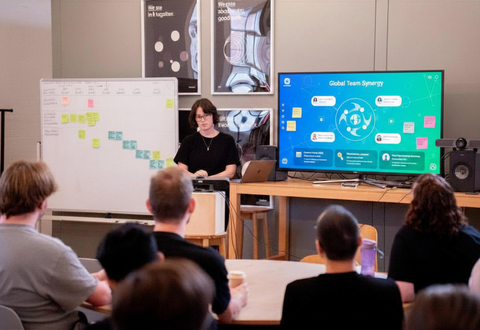
What a model may do, who it might disadvantage, what happens when it's wrong, and how someone contests an outcome are design questions. Which is also why adoption stalls. Given to a technology team, AI lands with people who understand the tools but can't change how an organisation works. Given to people and culture, it lands with people who can drive that change but don't feel equipped to judge the technology. Portable runs training workshops separately for leaders, practitioners and developers, because each needs something different to decide well.
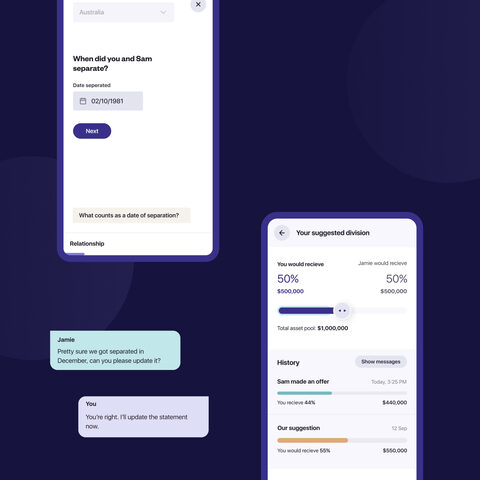
amica came out of Portable's early machine learning work in the justice sector, and it divides property and assets between separating couples. To put a model in that position, Portable defined governance frameworks so it wouldn't be set and forget, and had it externally tested by statisticians, data scientists and AI policy experts at the University of Melbourne and Torrens University. Seven years on it's still running, and features in Gartner Research as a case study in AI-driven dispute resolution.