Design research and evaluation
Portable finds out what’s actually happening: how people experience a service, what gets in their way, and whether what an organisation is doing is working.
Portable finds out what’s actually happening: how people experience a service, what gets in their way, and whether what an organisation is doing is working.

Portable uses research to test what organisations think they know, before those assumptions become costly decisions. We tested Victoria Legal Aid’s website with the people who use it, validating the site structure while reshaping content. We mapped the current state of Beyond Blue before designing services around future community needs. Creative Australia commissioned us to run a workforce scoping study rather than guessing what a sector under pressure required.
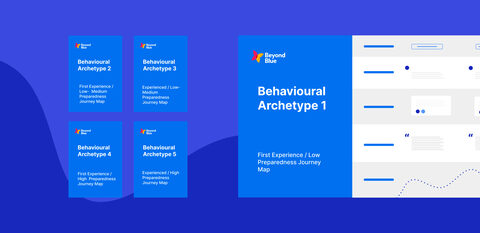
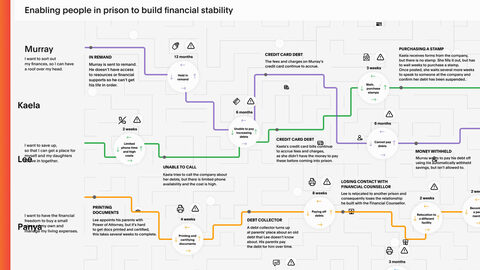
Portable has researched the barriers facing people in prison trying to resolve financial problems, public transport access for migrants and refugees, and what economic independence means to First Nations people building businesses.
Evaluating a new death notification service for the Registry of Births, Deaths and Marriages meant talking to people arranging a funeral, alongside the funeral directors and call centre staff on the other side of those conversations. Those findings went on to inform the National Death Notification Service.
South Australia’s Office for Women asked Portable to evaluate ten Regional Safety Hubs supporting women and children experiencing family, domestic and sexual violence. The hubs run on lean staff and volunteers, with little capacity for formal reporting, and no program logic existed. Rather than inventing one or assuming intent, Portable anchored the evaluation to the Department’s existing outcomes framework, then built the evidence base from practice knowledge alongside operational data.
At VCAT, the Koori Support Team set a clear condition: people could not be reduced to data. So the monitoring framework was built around guiding principles that kept people central, and was authored by the team themselves. It’s now cited in the Victoria Law Foundation’s Smarter Data report.