Trauma-informed training on forced adoption in Australia
Forced adoption course modules: raising awareness and building skills in the aged care sector and beyond.
Forced adoption course modules: raising awareness and building skills in the aged care sector and beyond.
But many Australians remain unaware of this part of our history and the lifelong impacts it has had on many individuals and families. The forced removal of babies from young, unmarried mothers was common in a peak period of the 1950s to 1980s and, as people from this era get older, it’s increasingly important that service providers are aware of the impacts on people and know how to take particular care and avoid causing further harm.
Portable was contracted by the Department of Social Service (DSS) to design and develop online training resources for aged care and community services professionals to raise awareness of past policies and practices of forced adoption in Australia and provide practical, trauma-informed care principles. Many workers in these sectors were unfamiliar with the specific needs and sensitivities of individuals affected by forced adoption, which often led to unintended re-traumatisation or inadequate support.
This project has been recognised by two of the industries top awards, one for its excellence in Service Design and the other for its achievements in Digital Design.
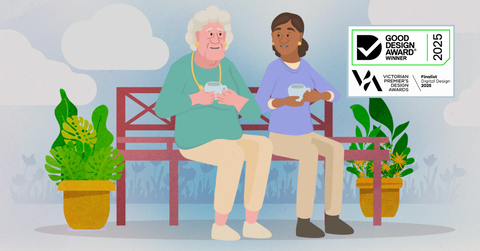
Partnering with PUR Production, the Blue Knot Foundation and NGNY, Portable collaborated with DSS and a specialised Advisory Group – comprised of people with lived experience, specialised Forced Adoption Support Services (FASS) representatives and industry experts – to create accessible, engaging and practical learning resources for people supporting individuals affected by forced adoption.
The training was tailored to the needs of a diverse audience, taking into account their general level of knowledge on the topic (low), the amount of time available to devote to learning (limited) and the subject matter (complex, nuanced). We aimed to create resources that are quick and easy to digest, provide an authentic first impression of forced adoption and offer practical steps people can take.
Ultimately, the goal of the training is to improve care and support outcomes for individuals and families affected by forced adoption. By extension, it has the potential to raise awareness of the impacts of forced adoption in the wider community.
The project aimed to:
Provide trauma-informed resources tailored to the needs of aged care workers, Forced Adoption Support Services (FASS) providers and general community services professionals to support individuals affected by forced adoption.
Increase awareness among aged care and community service professionals of the history of past forced adoption policies and practices.
Highlight areas where people with lived experience may face barriers or require specialised support, such as family breakdown, isolation and sensitivities in medical and personal care.
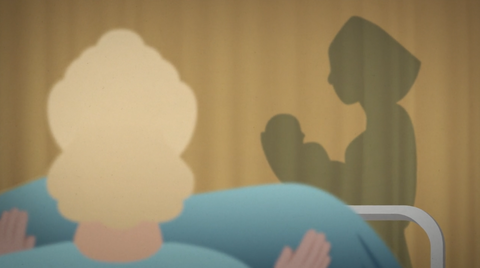
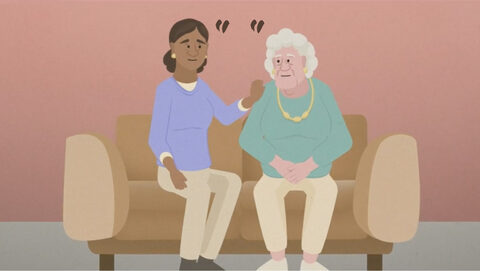
The project incorporated a high level of engagement with people with lived experience of forced adoption, individuals who advocate for people affected by forced adoption and professionals in the aged care, community services and allied health sectors. The engagement was instrumental in the design and development of eight training modules, which were complemented by animations created by PUR Production, downloadable resources and interactive content. These modules were designed to be completed in a short, 10-15 minute format to minimise time constraints on busy workers.
The training was tested across multiple platforms, including the Aged Care Learning Information Solution (Alis) and DSS's website, to ensure accessibility. Testing confirmed that users found the content engaging, empathetic and relevant, with an intuitive online learning environment that incorporated visual, auditory and interactive elements to accommodate various learning styles.
Positive feedback from participants highlighted that the training increased their understanding of forced adoption and equipped them with practical skills for supporting affected individuals. High levels of engagement were noted, indicating a successful alignment with the project’s objectives. The modules also received overwhelmingly positive feedback from the project’s Advisory Group.
“I am writing to express my admiration and thanks for the work done by all of you at Portable…I regarded my role as being the content. I think you nailed it - really well done.
– The Honourable Nahum Mushin AM, Advisory Group Member

The project approach incorporated four main domains. They were:
This project aimed to bridge workforce knowledge gaps by providing accessible, trauma-informed training. The training has been designed to equip professionals with the skills to recognise and respond to the unique challenges faced by people impacted by forced adoption, ultimately fostering a more compassionate and supportive care environment.
“I think this may come across the wrong way, and I don't intend it to, but it is an interesting topic. So apart from having the desire to learn more about it and integrate that into the care that I give to my patients, it also is really important for me to consolidate my learning.”
“You're touching on something really important for us to heal…it's not lost on us this span of time…we will have people who are mothers entering into aged care and we will also soon, if not already, have forced adoptees entering into aged care in that era as well.”
“My initial thought was gosh that was good. I felt like I was connected to the clients and that I understood their difficulties.”
“We feel like we hit the jackpot with Portable. The timeline was extremely tight and the pressure was immense but the quality of the product is amazing. It’s such a sensitive and complex topic and every one of you nailed it. We’re so grateful. ”
“This project has had a deep and profound affect on me. The generosity and trust our team received from people with lived experience and their advocates is something that will stay with me. We were careful to carry this trust with us into every aspect of this project: every word, every picture, every piece of information that will help learners understand this dark part of Australian history and then translate it into trauma-informed care. Ultimately, I hope this training leads to more compassionate care for individuals and families affected by forced adoption. ”
Beth HylandDesign Services Lead
Willhemina WahlinSenior Design Strategist
Adam CorcoranPrincipal Design Strategist
Emma McCannBusiness Director, Digital Projects & Design

Tess WaterhouseSenior Producer