The themes that emerged from the research will ring true to anyone who works in the education space. Teachers are pressed for time and are juggling many tasks to deliver quality education to young people. They seek out efficiencies in all processes they do, and every smoothed path and shortcut is helpful.
In the classroom context, paper-based records are still an important part of teachers’ practice, as digital devices distract from learning and are often less efficient. So, this must be kept in mind when developing digital tools and their supporting documents for educators.
Practical supporting materials that can be printed out and scribbled on are still an essential part of teachers’ toolkit. As are support and guidance on communicating with parents about their children and the observations teachers have made about them.
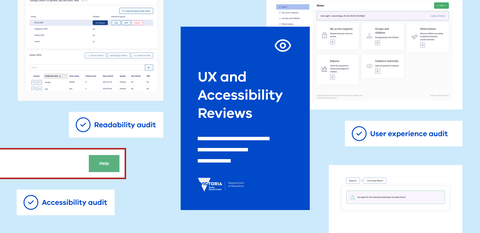
Overlaying our qualitative findings with a technical lens focusing on accessibility, usability and readability allowed us to provide a range of suggested updates to the tool, including quick wins that are low (design and developmental) effort, medium-term gains to be prototyped and developed, and long term opportunities to explore in more depth with further research and testing.
Our final deliverables included:
- A comprehensive UX report detailing accessibility, usability, and readability improvements
- Key recommendations for enhancing educator experience and supporting tool longevity
- User insights grounded in real educator experiences and workflows
- Recommendations to take forward to improve the product in ways that will make it more useful and usable for teachers
- A foundation for future enhancements aligned with national education strategies
The Department now holds a validated, user-informed roadmap to improve the EYALT, with next steps that can be taken forward internally or in partnership with development vendors.