We submitted to the Senate wage theft inquiry. Here's why.
Australia's criminal wage theft laws are only as effective as the infrastructure that supports them.
Australia's criminal wage theft laws are only as effective as the infrastructure that supports them.
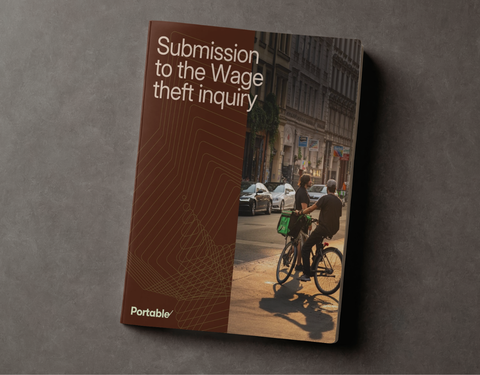
That's the core of what we told the Senate Standing Committee on Education and Employment in our submission to the inquiry into s327A(1) of the Fair Work Act 2009.
Over four years of research and product development on Sweep, we've learned something simple: most underpayment isn't detected at all.
The Senate inquiry asks whether the criminal framework has reduced wage theft. It's a fair question. But we think there's a prior one worth asking: do workers and employers have the information they need to make that framework function as intended?
For the millions of Australians covered by modern awards, the honest answer is mostly no. Award conditions are genuinely complex. Payslips are often opaque. And most workers have no practical mechanism to check whether what they're being paid matches what they're owed.
Criminal liability can deter deliberate wrongdoing. It can't substitute for the detection infrastructure that turns underpayment into something that can actually be acted on.
Deliberate underpayment is real, and actively harming Australians. We focus on underpayment regardless of intentionality, as increased information gives employees, employers, and government clarity and better avenues for accountability. We won't solve intentional underpayment on our own, but we aim to be a valuable part of the solution.
Portable has spent twenty years working at the intersection of human-centred design, technology, and behaviour change often on issues where the stakes are high and the systems are complex. Justice and workplace fairness sit squarely in that space.
Sweep has given us something more specific: a close view of how underpayment actually plays out for workers across business Australia-wide. The picture isn't primarily one of bad actors. It's one of genuine complexity, limited information, and relationships that are worth preserving when resolution is possible.
That's not a reason to go soft on deliberate wage theft. It's a reason to invest in the systems, tools, plain-language guidance, and payslip verification, that make early detection and resolution possible before things escalate.
Our submission invites the committee to consider a safe harbour for employers who can demonstrate they've taken genuine, documented steps toward compliance. For example, by using a certified compliance platform or actively encouraging employees to use a payslip verification tool.
Done well, this kind of provision would create a commercial incentive to invest in compliance, raise the practical floor of what "reasonable steps" looks like for small businesses, and allow enforcement attention to concentrate where it matters most: on employers who have chosen not to engage.
We're conscious a safe harbour could be misused if poorly designed. We've said so clearly in the submission. Any such provision needs to apply only where compliance efforts are substantive.
You can read our full submission to the inquiry on the Australian Parliament website, or through the button below. We'd welcome any conversation with others working in this space.
Sweep is live in app stores as of May 2026. Download the app and try the payslip checker, share it with the people in your life who are in the most vulnerable for underpayment, and share your feedback with us to grow the product.